Most Wisconsin homeowners do not think about their roof until there is water dripping onto their kitchen floor at 11 pm on a February night. By that point, a repair that could have cost a few hundred dollars has turned into an emergency situation, and often a much larger bill.
The good news is that your roof gives you warning signs well before it fails completely. You just need to know what to look for. After 30 years of inspecting roofs across Oconomowoc, Waukesha County, and surrounding Wisconsin communities, the team at Windlickers Roofing and Exteriors has seen every pattern of roof failure, and the five signs below are the ones that show up every single time before a major problem arrives.
Sign 1: Your Roof Is 20 Years Old or More
Standard architectural asphalt shingles in Wisconsin are rated for 25 to 30 years under normal conditions. But “normal conditions” in Wisconsin, with the freeze-thaw cycles, the heavy snow loads, the summer hailstorms, and the ice dams, accelerate that aging. If your roof is approaching or past 20 years old, it is not a question of whether it will need replacing, but when.
A 20-year-old Wisconsin roof that has gone through multiple severe storm seasons may be functionally at the end of life even if it appears intact from the street. An annual inspection becomes critical at this age, not because something is necessarily wrong right now, but because the cost of discovering a problem early is far lower than the cost of discovering it through a leak. If your roof falls into this window, it’s worth reviewing what a full roof replacement and installation actually involves before you’re forced into the decision by an emergency.
Sign 2: Shingles Are Curling, Buckling, or Missing
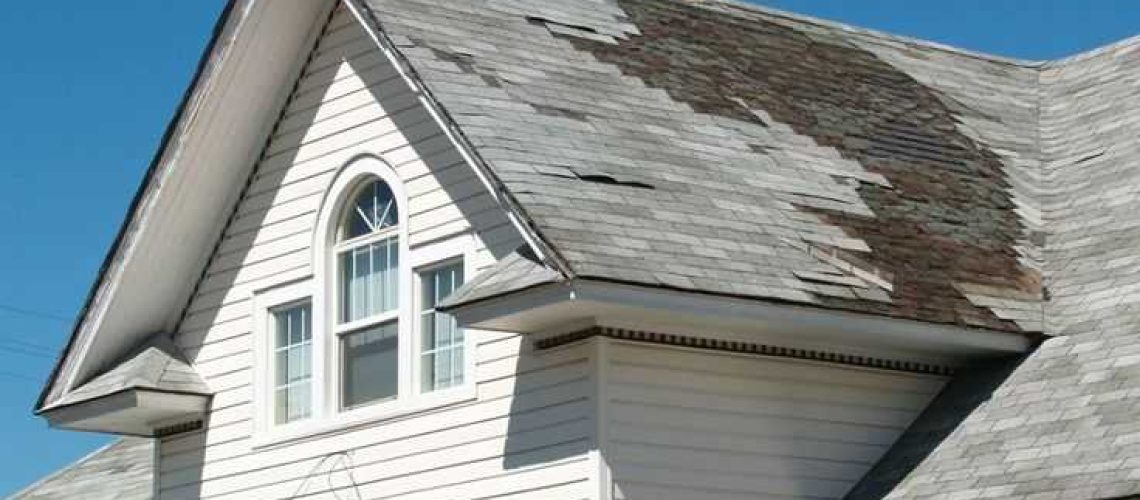
Walk around your home and look up at the roof line. If you see shingles that are curling at the edges (called cupping) or lifting in the middle (called clawing), this is a direct sign that the shingles have lost their integrity. Both patterns indicate that moisture is affecting the shingles from below, often a sign that the ventilation system is failing or that the shingles themselves have reached the end of their useful life.
Missing shingles after a Wisconsin storm are also a red flag. One or two missing shingles can often be repaired. But if you are seeing multiple missing shingles in different areas of the roof, or if missing shingles keep recurring season after season, the underlying cause is likely systemic deterioration rather than isolated storm damage. If a recent storm is what sent you looking for this article, our storm damage repair team can tell you quickly whether you’re looking at a patch job or something bigger.
Sign 3: You Are Finding Granules in Your Gutters
Asphalt shingles are coated with granules that protect the asphalt from UV degradation. Toward the end of a shingle’s life, those granules begin to shed, and they end up in your gutters. After a heavy rain or when you clean your gutters, if you are finding what looks like coarse sand or small pebbles in significant quantities, your shingles are losing their protective coating.
A small amount of granule loss is normal throughout a shingle’s life. What you are watching for is accelerating loss: gutters that are full of granules after every rain event, or shingles that appear lighter in color than they used to (a sign the granule layer has been significantly depleted). This is one of the clearest indicators that a Wisconsin roof is approaching the end of its functional life. While you’re checking, it’s also worth having your gutters inspected for damage or clogging, since a gutter system that can’t drain properly makes every one of these problems worse.
Sign 4: You Can See Daylight Through Your Roof Boards
On a sunny day, go into your attic and look up. If you can see pinpoints of daylight coming through the roof boards, water can get in through those same gaps, and in Wisconsin winters, so can cold air, which drives ice dam formation. Light coming through means the roof system has gaps, cracks, or deteriorated materials that are no longer providing a continuous barrier.
While you are in the attic, look for water stains on the rafters and sheathing. Dark streaks or soft spots in the wood indicate past or active leaks. If the sheathing feels spongy when you press on it, rot has already begun, and this affects not just the cost of a new roof, but the structural integrity of the repair.
Sign 5: Your Energy Bills Have Been Climbing Unexpectedly
A failing roof is not just a water problem, it is an energy problem. A roof that has lost its integrity allows conditioned air to escape in summer and cold air to infiltrate in winter. Wisconsin homeowners often notice their heating bills increasing in the years before a roof replacement becomes necessary, but they rarely connect the two.
If your HVAC system is in good shape but your bills are climbing, your attic insulation is adequate but your home is still drafty, or you are noticing more ice dam activity on your roof than in previous years, your roof and its ventilation system should be on the inspection list. In some cases a targeted roof repair can resolve the issue; in others, it’s a sign the whole system needs to be replaced. A free inspection is the only way to know which situation you’re in.
Not sure if your roof needs repair or replacement? Windlickers offers free inspections across Waukesha County. We will tell you honestly what we find, and give you a clear recommendation with no pressure.
Frequently Asked Questions
How long should a roof last in Wisconsin’s climate?
A quality architectural asphalt shingle roof should last 20 to 30 years in Wisconsin under normal conditions. However, the state’s combination of heavy snowfall, ice dam formation, summer hail, and extreme temperature swings can shorten that lifespan by 3 to 7 years compared to milder climates. Regular annual inspections and prompt attention to minor repairs extend the functional life of any Wisconsin roof.
Can a roof that is 20 years old still be repaired instead of replaced?
It depends on the extent of the damage and the overall condition of the shingles. If the damage is isolated and the remaining shingles are still structurally sound, a targeted repair can extend the life of a 20-year-old roof by another 3 to 5 years. However, if the shingles are showing widespread granule loss, curling, or brittleness, repair money is often better invested in a new roof that will perform reliably for another 25 years.
What does a roof that needs replacing look like from the inside of the attic?
From inside a Wisconsin attic, a failing roof typically shows water stains on the sheathing or rafters (dark brown or black streaks), soft or spongy wood in areas where moisture has penetrated, pinpoints of daylight visible through the roof boards, and frost or ice accumulation on the sheathing during winter, a sign of inadequate ventilation that accelerates ice dam formation.
Is granule loss on shingles always a sign that a Wisconsin roof needs replacing?
Not always immediately, but it is a serious warning sign. Minor granule loss throughout a shingle’s life is normal. When granule loss becomes significant, gutters full of granules after every rain, visibly lighter patches on shingles where the granule coating is gone, the asphalt underneath is exposed to UV damage and moisture penetration. In most cases, widespread granule loss indicates a roof in the final 3 to 5 years of its functional life.
Can I wait another winter before replacing my aging Wisconsin roof?
Waiting another Wisconsin winter with an aging or compromised roof is a significant risk. Ice dam season, November through February, is the most destructive period for a roof that is already showing signs of failure. Water that penetrates even a small gap can freeze, expand the gap, cause structural damage to the sheathing, and lead to interior water damage that far exceeds the cost of the roof replacement itself. Our recommendation is always: do not let a marginal roof face another Wisconsin winter.
How do I know if my roof is leaking or just has condensation in the attic?
Condensation typically appears as a uniform coating of frost or moisture across a large area of the attic sheathing, concentrated near the eaves and ridge, and is more pronounced on cold mornings. A leak, by contrast, shows up as isolated staining, dark streaks or water marks concentrated in one area, often directly below a penetration like a chimney, vent pipe, or valley. Both require attention, but a targeted inspection by a Wisconsin roofing contractor can identify the cause quickly.